Use of Renewable Electricity
Epson considers the use of renewable electricity to be a key means of achieving its decarbonization goals and is promoting activities around the world.
- Switching to Renewable Electricity
- Transitioning to Renewable Energy at Epson's Global Sites
- Support for Recommendations to Expand the Use of Renewable Energy
Switching to Renewable Electricity
In March 2021, Epson declared that it would switch to 100% renewable electricity to meet the electricity needs at all Epson Group sites1 around the world by 2023. In November 2021, the switch was completed in Japan. The global switch to renewable electricity was completed on schedule in December 2023. The Epson Group consumes approximately 867 GWh2 of electricity per year. By sourcing renewables to cover this demand, Epson expects to reduce its annual CO2 emissions by approximately 400,000 tonnes.
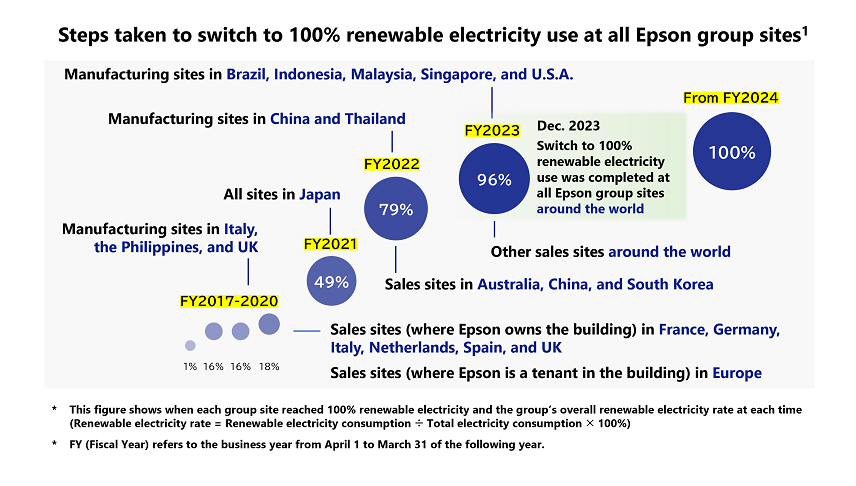
1 Excludes electricity consumption at certain sales offices and leased facilities for which usage data is unavailable, as well as fuel-based onsite power generation, including cogeneration systems (CGS)
2 For the fiscal year 2024, the results include cogeneration systems (CGS) electricity and self-generated electricity using non-renewable fuels. Since it is difficult to procure renewable energy fuels or green gas certificates that meets the RE100 technical criteria, we have achieved 100% renewable electricity by voluntarily applying renewable energy certificates equivalent to the amount of electricity used.
Related Information
Epson Manufacturing Supported by 100% Renewable Electricity
This introduces Epson's efforts to become carbon negative by 2050. (Video/article)
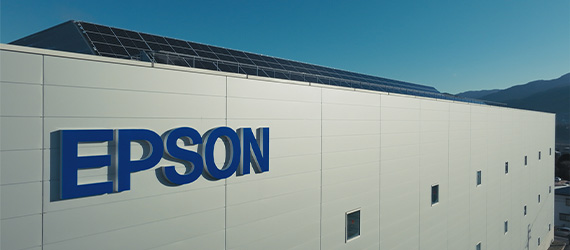
Scope1 & 2 emissions and electricity consumption in FY2024
More than 70% of Epson's GHG emissions came from electricity use in FY2017. As a result of our efforts to switch to renewable electricity to achieve decarbonization, GHG emissions from electricity will be zero in FY2024, significantly contributing to the reduction of Scope 2 emissions. Both domestically and internationally, we are increasing the proportion of renewable energy to 100% of our electricity usage by selecting the optimal renewable electricity in each region, such as hydro and wind power, and by actively investing in on-site electricity generation.
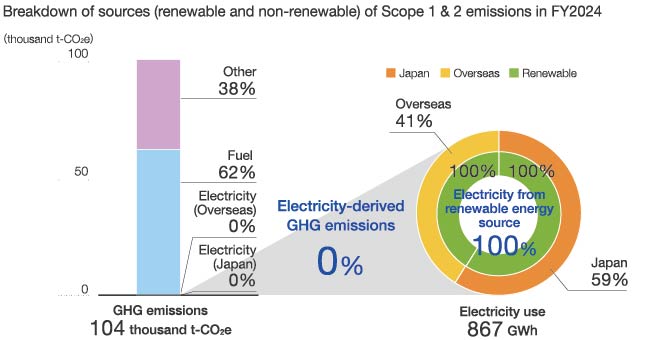
Transitioning to Renewable Energy at Epson's Global Sites
In Japan, Epson purchases Shinshu Green Electricity, CO2 free value-added electric power produced locally with abundant water sources in Nagano Prefecture using Nagano Prefectural hydroelectric power. This is both reducing Epson's GHG emissions and increasing local consumption of locally produced energy. In the Tohoku area, where Epson has a semiconductor fabrication plant and which accounts for about half of Epson's domestic electricity consumption, Epson uses another CO2-free value-added electric power to reduce GHG emission from electricity usage. In November 2021, Epson completed the transition to 100% renewable electricity for all its domestic sites in Japan.
Our overseas production and sales sites have also completed the transition to using 100% renewable electricity in December 2023. In addition to generating electricity with a rooftop mega-solar power plant, our production site in the Philippines switched to a mix of geothermal and hydroelectric power in January 2021. In addition, our production site in Bekasi, Indonesia, began using biomass power generation in July 2022. The procurement of geothermal power, which is being actively developed by taking advantage of the resources of volcanic islands, and sustainable biomass power using Palm Kernel Shells (PKS; a byproduct of the palm oil production process) and wood chips as fuel, are examples of energy use that aligns with regional characteristics.
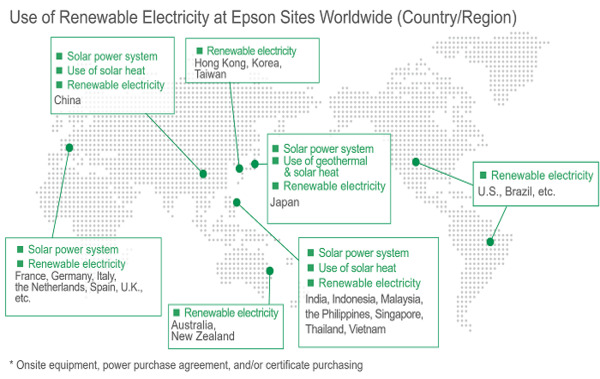
Installation of on-site power generation systems (solar power generation systems)
We are executing a plan to maximize the amount of self-generated electricity in order to stably and sustainably procure renewable energy. We are selecting the best option depending on the circumstances at each site. At some sites we have invested in rooftop and other solar panels. At others we have opted for power purchase agreements (PPAs).

Case of onsite solar power generation
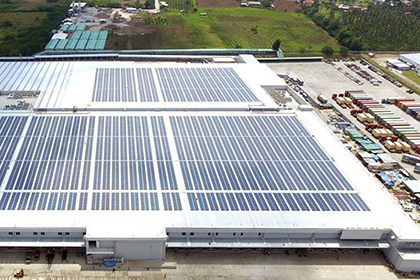
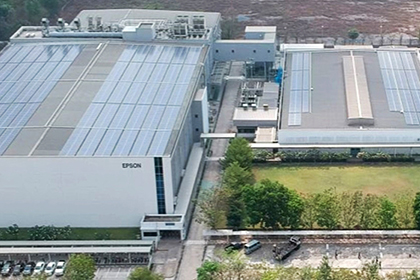
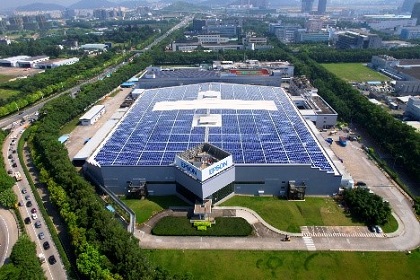
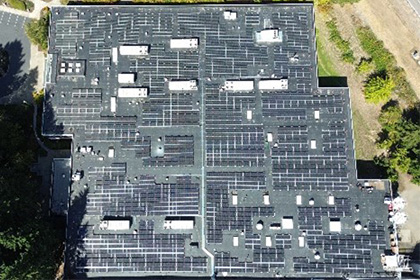
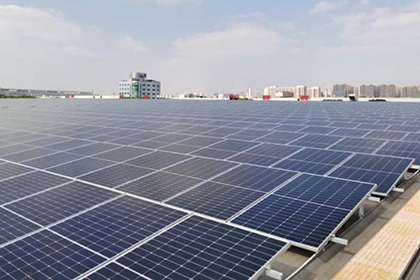
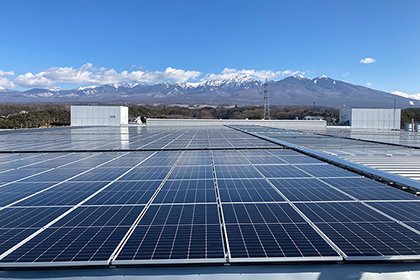
1 Power Purchase Agreement: Onsite Solar Power Generation Service
Support for Recommendations to Expand the Use of Renewable Energy
The use of renewable energy (energy from natural sources) is one of the most effective ways to reduce GHG emissions. Accordingly, Epson is implementing plans to expand its use of renewable energy long-term. However, there are obstacles to expanding renewable energy use, including costs and supply limitations in some regions. Recognizing that there is nothing one company alone can do about these obstacles, Epson decided to declare its support for the important policy recommendations below as one solution. The realization of these recommendations will make it easier to take actions that minimize the impact on future climate change.
Coordinated global action is essential to combat climate change. We at Epson will therefore continue our efforts toward decarbonization, including by supporting future such recommendations. When deciding whether to join or continue our association with industry groups, we check whether the group's climate change initiatives are aligned with Epson's own policies.
| Month/Year | Recommendations | Secretariats |
|---|---|---|
| January 2026 | Declaration to lead the transition to a decarbonized society Click here for details. |
Japan Climate Initiative (JCI) |
| Nov. 2025 | Improvements to National Systems and Rules: For Corporate Renewable Energy Procurement Click here for details |
Renewable Energy Institute |
| Jul. 2024 | Call for an ambitious 2035 target that is consistent with the 1.5℃ goal Click here for details |
Japan Climate Initiative (JCI) |
| Jun. 2023 |
Issues and Recommendations on Renewable Electricity Procurement Click here for details |
Renewable Energy Institute |
| Apr. 2023 | Call for accelerating the deployment of renewable energy and introducing effective carbon pricing Click here for details |
Japan Climate Initiative (JCI) |
| Jun. 2022 | Call for accelerating renewable energy deployment Click here for details |
Japan Climate Initiative (JCI) |
| Apr. 2021 | Calling for an Ambitious 2030 Target for Japan to Realize the Paris Agreement Goal Click here for details |
Japan Climate Initiative (JCI) |
| Jan. 2021 | Calling on the Japanese government to raise its 2030 renewable energy target to 40-50% Click here for details |
Japan Climate Initiative (JCI) |
| Aug. 2020 |
Making Japan a Nation where Renewable Electricity is Easily Accessed: Three Strategies and Nine Policies Sought by Corporations Engaged in Climate Action Click here for details |
Renewable Energy Institute CDP Worldwide-Japan WWF Japan |
Related Information
Social Media UseSocial Media Use