Environmental Value
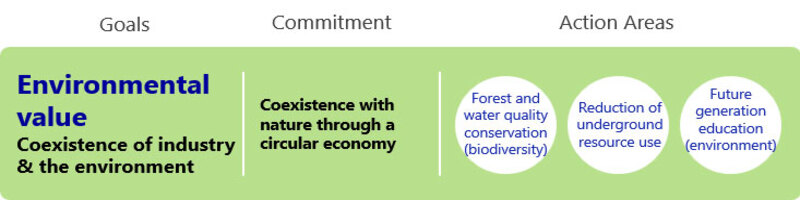
Epson engages in environmental initiatives focused on forest and water quality conservation (biodiversity preservation), reduction of underground resource use, and environmental education.
Forest and Water Quality Conservation (Biodiversity)
Epson believes that maintaining healthy biodiversity is essential for sustaining business activities and the lives of its employees.
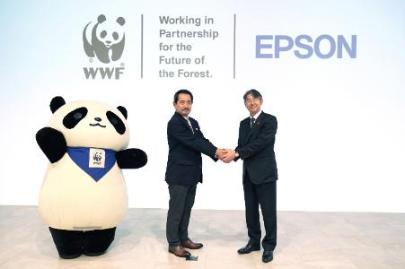
In 2026, we began the second phase of our partnership with WWF (World Wide Fund for Nature) to promote forest conservation and restoration. For more information, please see Conservation of Biodiversity.
Future Generation Education (Environment)
Donations of Notebooks Made of PaperLab Recycled Paper (Japan)
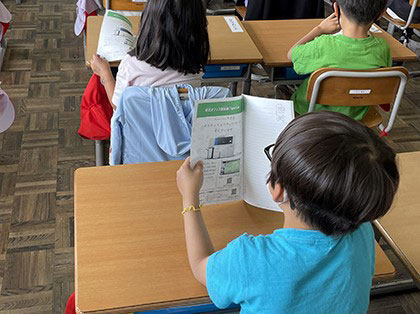
Seiko Epson has been donating notebooks to elementary and junior high schools in Nagano Prefecture since FY2022.
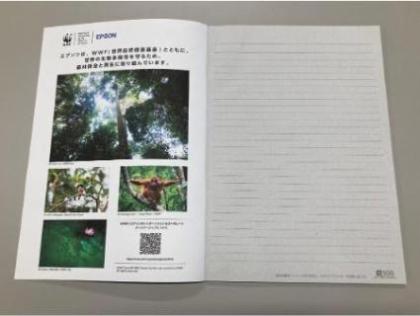
The notebooks are made from paper that was used within Epson and recycled using PaperLab dry-process office papermaking systems, which apply Epson’s unique Dry Fiber Technology.
A total of 140,000 notebooks had been donated to schools in 56 municipalities by the end of March, 2026. The donated notebooks, which provide information about Epson’s forest conservation initiatives and the origin story of PaperLab systems, are used in school environmental education programs and serve as an opportunity to teach children that paper recycling can contribute to the SDGs.
Epson also donated recycled printing paper produced with PaperLab to various municipalities. These donations give us an opportunity to communicate how we are using Epson products to help reduce CO₂ emissions. They also help to foster broader community engagement.
Experiencing the Connection Between Forests and Oceans (Japan)
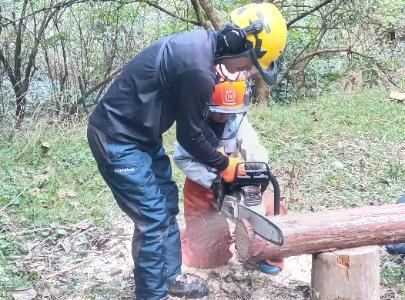
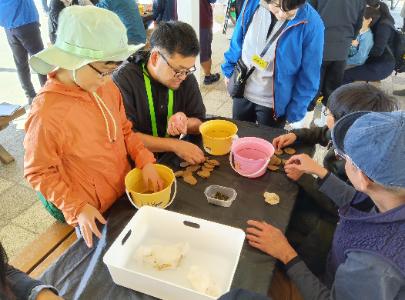
Seiko Epson continues to support and participate in the "Moriumi Festival," a family event in the Tenryu River basin that allows parents and children to experience and learn about the connections between forests, villages, rivers, and the sea. The second event, held in 2025, took place in Hamamatsu City and around Lake Hamana, with about 30 employees and their families participating. Through forest maintenance, participants learned about the multifaceted functions of forests, such as securing water sources, mitigating global warming, preventing disasters, and conserving biodiversity, and also learned about the role of eelgrass1in the brackish waters of Lake Hamana through hands-on experience, providing an opportunity to learn about the importance of environmental conservation.
1 A type of seagrass that grows in shallow waters. Seagrass meadows serve as a habitat and breeding ground for a wide range of marine organisms
Cleaning Lake Suwa by Kayak (Japan)
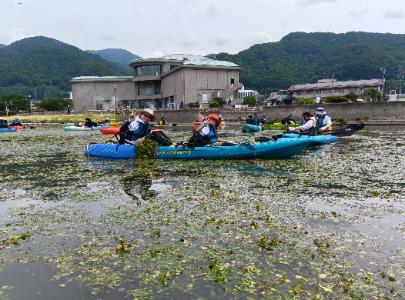
During summer months, a type of aquatic plant known as “hishi” in Japanese grows rapidly from the bed of Lake Suwa, spreading quickly across the water surface. Excessive growth can harm the view and ecosystem. It also negatively affects water quality and fish habitats, making early removal essential.
Since FY2025, Epson has been organizing a lake cleanup using kayaks. In FY2026, some 60 Epson employees and members of their families joined the effort, removing hishi and collecting litter while experiencing the lake firsthand. Many participants commented, "It gave me an opportunity to learn about the water quality and the state of the mud on the lake bottom," and "I'm glad I was able to take part in something I wouldn't have been able to do on my own." It was an activity that allowed families to deepen their understanding of the local environment while having fun together.
Social Media UseSocial Media Use