Supply Chain Environmental Initiatives
Epson is committed to reducing environmental impact throughout its entire business operations, from raw materials procurement to product disposal and recycling. In procurement activities, collaboration with suppliers is essential, and together we are working to reduce environmental impact.
Collaboration with Suppliers on Environmental Initiatives
Environmental Requirements in the Supplier Guidelines
Epson's Supplier Guidelines include a code of conduct that suppliers are required to adhere to. In addition to requests related to quality, cost, delivery (QCD), and compliance, the Supplier Guidelines set forth the Supplier Code of Conduct on CSR (aligned with the RBA Code of Conduct). Regarding the reduction of environmental impact, Epson requires its suppliers not only to comply with the RBA Code of Conduct (covering pollution prevention and resource conservation, hazardous substances, solid waste, and air emissions, etc.) but also to address environmental issues such as reducing greenhouse gas emissions, promoting resource circulation, managing water resources, managing chemicals, and preserving biodiversity. Additionally, Epson requests that suppliers manage chemical substances contained in products and ensure compliance with environmental regulations at their factories.
Initiatives for Reducing Greenhouse Gas Emissions
Epson has established specific short- and long-term greenhouse gas (GHG) reduction targets, as well as a net-zero target for 2050, in line with the scientific target-setting methodology proposed by the Science Based Targets initiative (SBTi). These targets are based on the GHG emissions data for scopes 1, 2, and 3 that Epson has gathered in accordance with the GHG Protocol.
In addition, Epson has joined the international initiative RE100. The company committed to achieving 100% renewable electricity at its sites worldwide1 by 2023.This transition was successfully completed in December 2023.This change will reduce Epson's GHG emissions by approximately 400,000 tonnes per year.
Going forward, we will work to reduce emissions throughout our supply chain in order to achieve our total emissions reduction target in line with the high target of the 1.5°C scenario.
1 Excluding some leased properties where the amount of electricity cannot be specified, such as sales offices.
Related Information
News Release: Epson Joins RE100 Initiative and Reconfirms Commitment to 100% Renewable Electricity
News Release: All Epson Group Sites to Use 100% Renewable Electricity by 2023
News Release : Epson Transitions to 100% Renewable Electricity at All Group Sites Worldwide
Epson Green Supply Chain
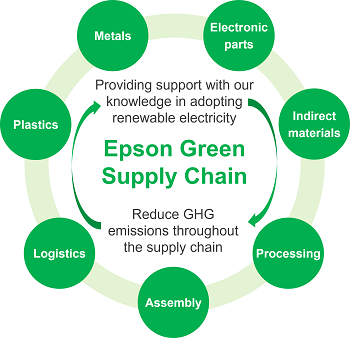
Epson's transition to renewable electricity in 2023 shows its significant first step in addressing the urgent global need for climate change action. However, a substantial portion of Epson's GHG emissions originates from its supply chain, necessitating strengthened collaboration between Epson and its suppliers to promote decarbonization across society.
Drawing on its experience and achievements in successfully completing the transition to renewable electricity early among manufacturers, Epson launched the Epson Green Supply Chain project in 2024. This project aims to foster understanding and encourage cooperation through workshops and seminars, while also implementing decarbonization target setting and providing support for the adoption of renewable electricity among suppliers. Through these activities, Epson seeks to increase the number of business partners who share its vision and to engage the entire supply chain in the challenge of reducing environmental impact.
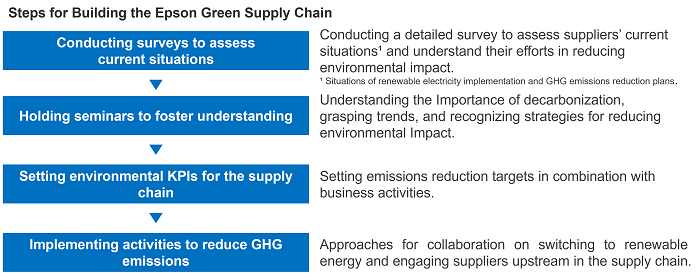
Main Initiatives
Based on the results of interviews with major domestic and overseas suppliers that account for 80% of the value of Epson'sprocurement spending2, we are implementing initiatives appropriate to suppliers’ situations throughout FY2025. For example, weprovide learning opportunities for suppliers that are about to begin, or are in the process of, calculating their Scope 1 and Scope 2emissions, with a focus on deepening their understanding of the
| Implementation period | Description | For | |
|---|---|---|---|
| FY2024 | April | Procurement Policy Briefing for Business Partners | 221 companies |
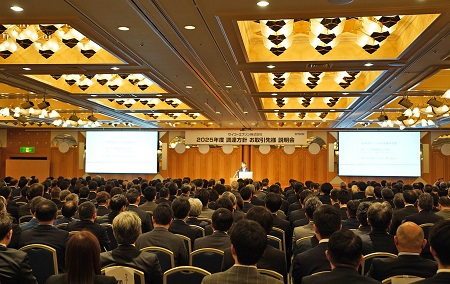
| June | Epson Green Supply Chain Conference | 115 companies | |
| July | Decarbonization Seminar | 1,271 participants in total | |
| FY2025 | April | Procurement Policy Briefing for Business Partners | 218 companies |
| May | Introduction of an environmental survey system for GHG visualization using SaaS (Japan) | Approx. 250 companies | |
| August~ | Seminars (domestic and overseas) in accordance with supplier initiatives
|
Scheduled 18 times in total | |
| 2nd half~ | Started discussions with suppliers about joint procurement of renewable electricity. | Global | |
2 Epson’s first-tier (direct) suppliers are arranged in descending order based on transaction amounts and selected until 80% of the total spend is reached.
Topics: Example of Supplier Initiatives
We spoke with Muramoto Industry Co., Ltd., a company that shared Epson’s commitment to renewable energy and began transitioning to renewables at an early stage.
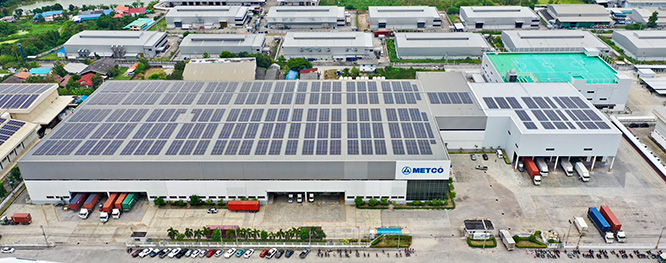
METCO (Muramoto Electron (Thailand) Public Co., Ltd.), Muramoto Industry's manufacturing site in Thailand, produces Epson printers and related products.
In 2022, we learned about Epson’s drive to transition to renewable energy. As a member of Epson’s supply chain, we recognized the importance of working together to reduce GHG emissions. We also recognized that, as environmental responsibility becomes an increasingly important global priority, responding to these expectations would become a fundamental requirement for suppliers.
As a result, METCO began introducing renewable energy in 2022 and, in October of that year, achieved 100% renewable electricity through the purchase of I-REC renewable energy certificates. The following month, we also began operating a solar power generation system. By generating electricity on-site, we were able to reduce the amount of renewable electricity procured through certificates.
The transition to renewable energy is not only an important part of METCO’s own environmental efforts but also contributes indirectly to reducing Epson’s Scope 3 emissions. Environmental challenges cannot be addressed by individual companies acting alone; it is essential for customers and suppliers to share a common direction and work together toward common goals. We will continue to collaborate with Epson and contribute to the development of a more sustainable supply chain.

The titles and positions are as of the time of interviews in May 2026.
Strengthening Engagement to Reduce Environmental Impact
Epson uses supplier conferences and other opportunities to ask its suppliers for cooperation in reducing the environmental impact ofbusiness activities across its supply chains. We also periodically evaluate our suppliers' environmental programs and the results oftheir environmental impact mitigation efforts. We assist them as needed to improve.
Direct Evaluation (Annual Evaluations) and Detailed CSR Evaluations for Suppliers
Suppliers are asked to complete direct evaluations (annual evaluations) and detailed CSR evaluations that include questions aboutthe environment. We collect and analyze their answers and provide feedback on the detailed CSR evaluations. Suppliers whosescores put them in the high-risk category are visited for on-site verification or audits and are aided to correct issues.
Environmental Impact Survey
In addition, we survey the suppliers who account for 80% of the value of Epson's procurement spending to find out about theirpolicies and status on renewable electricity initiatives, use of recycled materials, water usage, and awareness of biodiversity, etc.
Response to Climate Risk
As part of activities to mitigate climate change, it is essential to promote the use of renewable electricity and supplier engagement. At the same time, it is urgent to address the physical risks posed by the increasingly visible effects of climate change. Epson has suppliers across Asia, including in Thailand, where severe floods are a regular occurrence, and in China, where there is high potential water risk. Epson recognizes that interrupted or delayed deliveries from suppliers due to floods and droughts, two typical climate risks, could seriously impact the manufacture and sale of Epson products and need to be addressed to avoid inconveniencing customers.
Green Procurement
Epson is promoting the procurement of raw materials and parts with consideration for reducing environmental impacts.
Management of Chemical Substances in Products
To minimize the impact of chemical substance in our products on humans and ecosystems, Epson is committed to prioritizing theprocurement of parts and materials that do not contain harmful substances and have a low environmental impact.
Basic Principles Regarding Product Substance Assurance
Epson procures production materials on the basis of the following five principles:
-
- Comply with applicable laws and regulations.
- Procure materials from suppliers that can comply with conditions specified in this standard regarding banned substances (e.g., thresholds, parts and locations where substances are present, uses).
- Procure materials from suppliers who can guarantee that banned substances are not present in their products.
- Procure materials from suppliers who can provide data on target substances present in their products.
- Accept goods that have been guaranteed by the supplier.
Paper Products Procurement
Content of Conformity Procurement Management
The illegal logging of forests is a very serious issue for those seeking to protect the environment on the global scale and practice sustainable forest management. Around the world, greater efforts are being made to ensure legality and sustainability during the procurement of wood products.
Epson thus manages its entire supply chain from the immediate supplier all the way back to the forest to ensure the legality, sustainability and environmental safety of the paper products we procure. We ask that suppliers understand the intent and nature of these initiatives and give us their full support.
【Scope of Application】
Paper for Epson printers
【Procurement Policy】
-
- We make effective use of used paper and other recycled pulp.
- When virgin is used as a raw material in paper goods we procure, we confirm its:
Legality, sustainability, chemical safety, environmental management
Suppliers are asked to provide a Certificate of Conformity to Epson Paper Products Procurement Policy to confirm their compliance with the Procurement Policy.
Standard
Social Media UseSocial Media Use