Dry Fiber Technology
Dry Fiber Technology: Creating Value from Waste
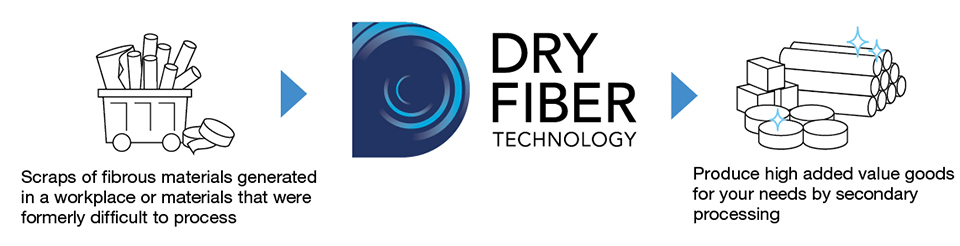
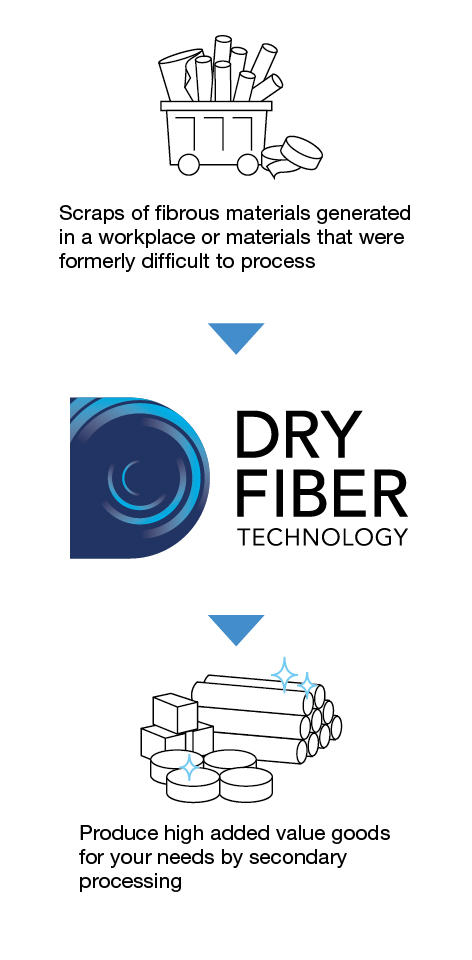
Dry Fiber Technology, a proprietary set of technologies developed by Epson, transforms fibrous materials1 into tangible value without using water.2 It produces highly functional materials by defibrating, binding, and forming fibrous materials as needed depending on the application. Dry Fiber Technology allows you to handle and process materials in ways you couldn't before, which not only reduces wastes but also produces new material characteristics.
The world's first dry-process office papermaking system
One of the products that uses Dry Fiber Technology is the PaperLab, the world's first office papermaking system3, a machine that produces new paper from used paper without using water for defibration.Offices often hire a recycling service provider to collect and recycle their used paper. At paper recycling plants, used paper is broken down and separated into fibers in a mixture of water and chemicals. The fibers are then usually bleached before again being processed into paper. Recycling paper waste to reduce environmental impacts is problematic because the process consumes tremendous water resources.If paper can be made without using water, the paper recycling cycle will change dramatically. Epson's Dry Fiber Technology has made this papermaking dream possible.
Producing new paper from used paper
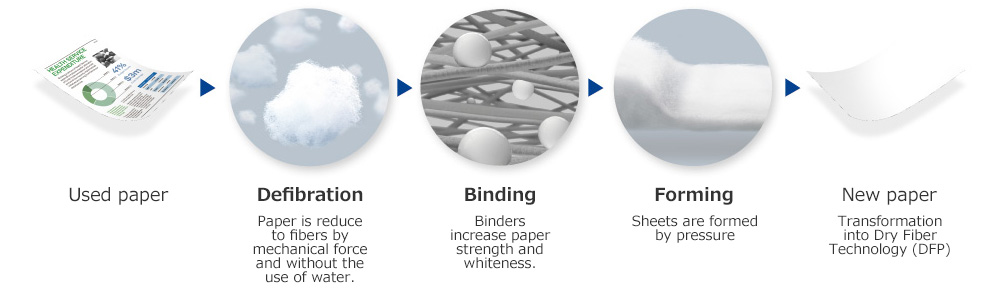
| Defibration | A defibration unit developed by Epson mechanically breaks down used paper into fibers without using water. All traces of information are completely and securely destroyed instantaneously. |
|---|---|
| Binding | The fibers are bonded together using a binding material called PaperPlus, which can also add color or increase paper whiteness, depending on the type. |
| Forming | Pressure is applied to the bonded fibers to form new sheets of paper. You can produce Dry Fiber Paper (DFP) of various weights and in sizes ranging from A4 and A3 to business card size by controlling the density, thickness, and shape when the sheets are pressed. |
We first sought to recycle paper that comes out of offices. Government offices and many businesses ordinarily use a paper recycling company to collect and recycle sensitive documents. However, for security reasons, they need to have an employee accompany the boxes of documents from pickup to pulping.
Document disposal is burdensome as a result. Dry Fiber Technology development therefore began with a search for ways to completely dispose of used paper on-site, in the office.
Paper recycling plants use huge amounts of water to turn paper waste into pulp, but offices usually do not have the necessary plumbing facilities to supply and drain large amounts of water. Therefore, we needed to develop a way to recycle paper without using water. We tried thousands of different dry methods before coming up with a method of defibrate paper mechanically by subjecting it to impacts.
Next, we needed to find a way to remove the inked parts of printed paper without washing it. A member of the development team who used to work with laser printers used laser technology to sort colored fibers from non-colored fibers. A binding material called PaperPlus that Epson developed is added to the non-inked fibers.
These fibers are then formed into sheets of new paper.
Since Dry Fiber Technology reduces paper to fibers, sensitive documents can be securely destroyed on site.
In 2018, Epson received the Economy, Trade and Industry Minister's Prize at the First EcoPro Awards (formerly the Eco-Products Awards) sponsored by the Japan Environmental Management Association for Industry (JEMAI) in recognition of the paper recycling technology excellence and innovativeness of the PaperLab, as well as for its use in producing environmental education materials, its use by local governments as a symbol of their environmental policies, and its contributions to resource recycling awareness.
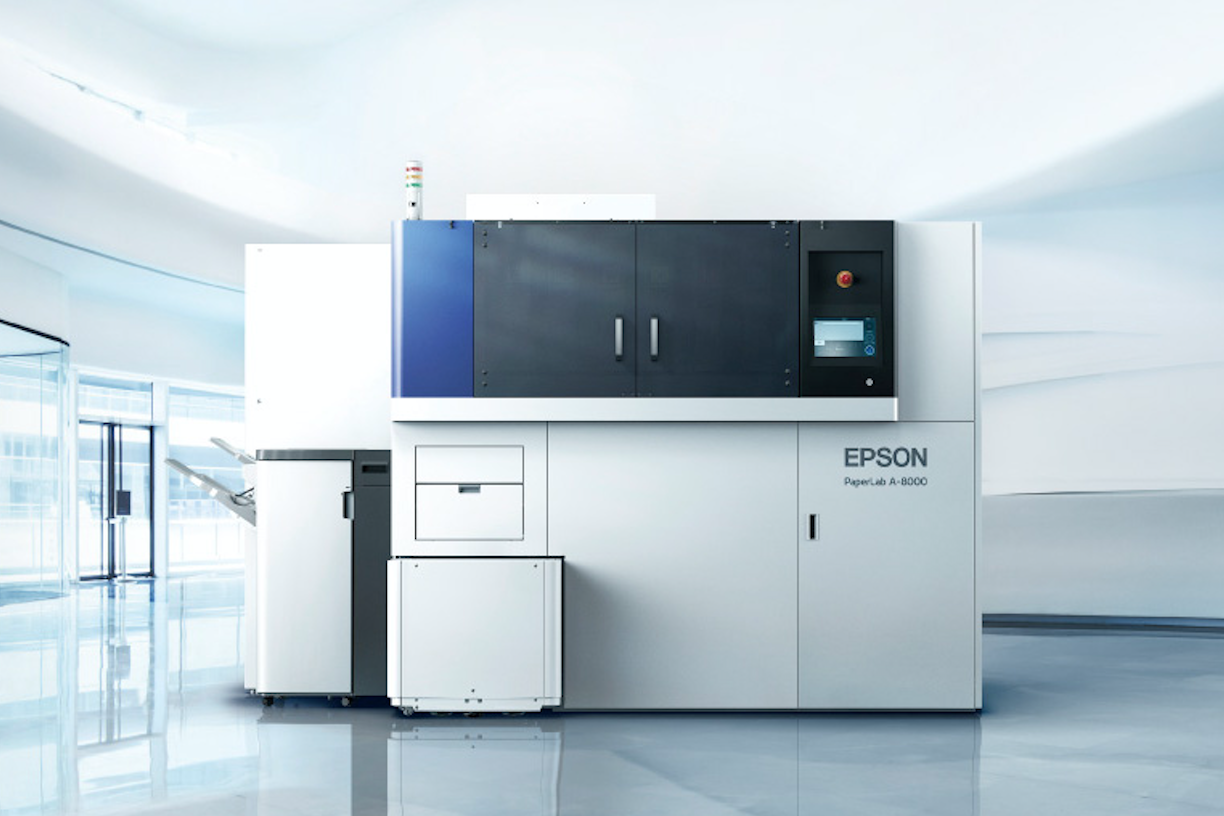
In-house Applications of Dry Fiber Technology
By advancing Dry Fiber Technology, we have enabled its in-house application using recycled paper and other materials as raw inputs.
Applying cotton clothing sewing scraps to watch packaging materials
In the textile and apparel industry, large volumes of fiber scraps and waste are generated during the garment sewing process, making their effective utilization a longstanding challenge.
At Epson, we have developed a new upcycled packaging material using scraps generated during the sewing process of cotton clothing as a raw material. This packaging material is now used for packaging for selected Epson watch products.

Printer ink pads
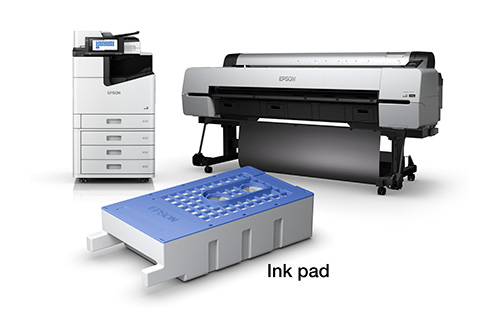
Epson is producing absorbent printer ink pads from used paper that is collected in-house.
These ink pads are made by loading used paper in machine equipped with Dry Fiber Technology, separating the paper into fibers, adding a binder, applying pressure to form pads, which are then cut.
This method of producing ink pads is already being used in Epson factories.
Note: These services are provided using YouTube™.
YouTube is a trademark of Google Inc.
Sound absorbing panels and packaging cushioning
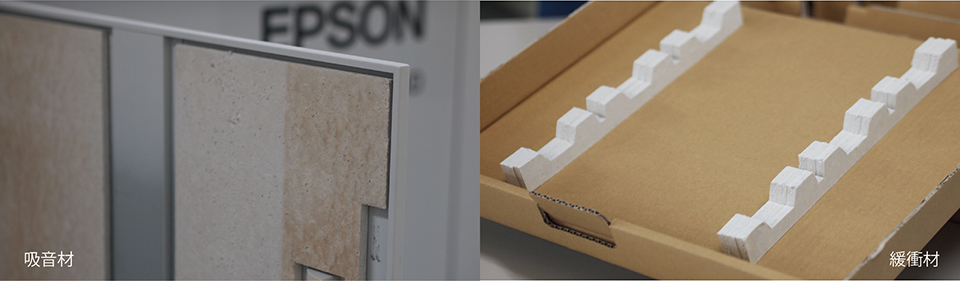
The porous panels made using Dry Fiber Technology are effective sound dampeners for equipment.
This property makes it useful in dampening machine noise, so Epson is using it to line the inside walls of equipment.
Cushioning made using Dry Fiber Technology is used by Epson in product packaging for shock absorption.
Face masks
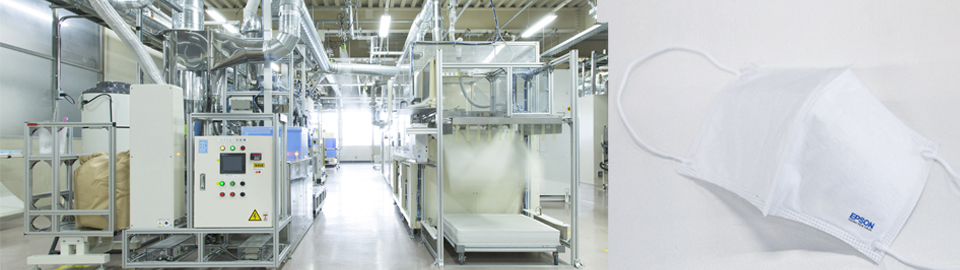
Epson began manufacturing face masks in response to the Covid-19 pandemic. Dry Fiber Technology was used to form the filtration layer situated between a mask's inner and outer layers from functional fibers, thus enabling Epson to rapidly launch mask production.
1 Various kinds of fibrous materials can be defibrated — animal, plant, and man-made.
2 A small amount of water is used to maintain a humidity inside the system.
3 Epson research conducted in November 2016
4These masks are not for sale.
Official Account